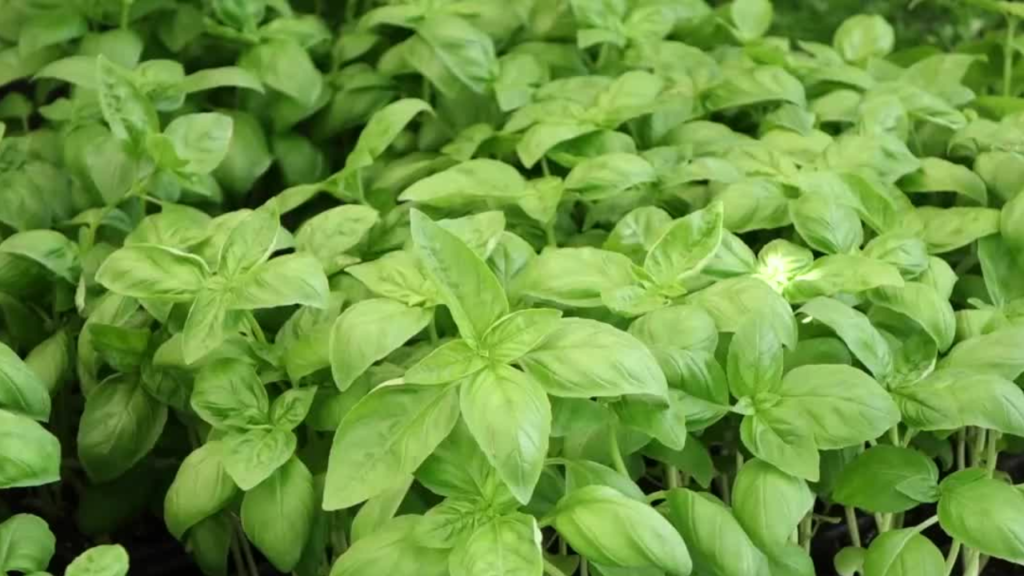
1. What Is Basil?
Basil (Ocimum basilicum) is an aromatic herb belonging to the mint family, Lamiaceae. It is widely used in Mediterranean, Southeast Asian, and other culinary traditions.
The plant has soft leaves, a distinctive fragrance, and a flavor that can range from sweet and peppery to citrusy or slightly anise-like, depending on the variety.
Basil is commonly sold fresh in grocery stores, farmers’ markets, and garden centers. It is also available dried, frozen, and in prepared products such as pesto.
According to Illinois Extension’s basil growing guide, basil varieties differ in leaf size, color, aroma, and growing characteristics.
The leaves are the part most commonly used in everyday cooking. Some basil varieties also produce edible flowers, and basil seeds are used in certain foods and beverages.
Important distinction: Culinary sweet basil, holy basil, and basil seeds are not interchangeable. They come from different plant types or plant parts and have different culinary uses and research profiles.
2. Types of Basil
There are many basil varieties. Their differences in aroma, appearance, and flavor influence how they are used in cooking.
Sweet basil
Sweet basil is one of the most common culinary varieties in the United States. It has broad green leaves and a fresh, sweet, slightly peppery aroma.
Common uses:
- Tomato sauces
- Pesto
- Pizza
- Pasta
- Salads
- Sandwiches
Sweet basil is particularly useful in dishes where its fresh aroma is an important part of the finished flavor.
Genovese basil
Genovese basil is a type of sweet basil associated with Italian cooking. It typically has large, aromatic green leaves.
Common uses:
- Traditional basil pesto
- Pasta sauces
- Tomato salads
- Bruschetta
- Vegetable dishes
It is a practical choice for recipes that call for generous quantities of fresh basil.
Thai basil
Thai basil is commonly used in Southeast Asian cooking. Its aroma is often described as more anise-like or licorice-like than that of typical sweet basil.
Common uses:
- Thai curries
- Stir-fries
- Noodle dishes
- Soups
- Fresh herb garnishes
Thai basil can retain a distinctive flavor in cooked dishes, making it useful when a recipe specifically calls for it.
Lemon basil
Lemon basil has a noticeable citrus-like aroma.
Common uses:
- Fish and seafood
- Salad dressings
- Vegetable dishes
- Rice
- Tea and infused beverages
Its citrus character can complement ingredients such as lemon, lime, cucumber, and mild vegetables.
Cinnamon basil
Cinnamon basil has a warm, sweet aroma reminiscent of cinnamon.
Common uses:
- Fruit salads
- Herbal beverages
- Vinegars
- Selected desserts
- Savory dishes that benefit from a warm aromatic note
Its flavor differs from conventional sweet basil, so it may not be the ideal substitute in every recipe.
Purple basil
Purple basil varieties have dark purple, bronze, or reddish leaves. Their color comes partly from plant pigments called anthocyanins.
Common uses:
- Salads
- Garnishes
- Herb-infused vinegars
- Decorative dishes
- Sauces
Purple basil can add visual interest as well as flavor. The color and aroma vary by variety.
Holy basil or tulsi
Holy basil, commonly called tulsi, is generally identified as Ocimum tenuiflorum, also known as Ocimum sanctum in some literature.
It has a different flavor profile and traditional use from common sweet basil. It is particularly important in South Asian food and cultural traditions and is frequently discussed in research on traditional herbal preparations.
Holy basil is not simply another name for sweet basil. Evidence about holy basil extracts should not automatically be applied to ordinary sweet basil leaves used in meals.
Quick comparison of basil varieties
| Variety | Typical aroma | Common culinary applications |
|---|---|---|
| Sweet basil | Sweet, fresh, peppery | Pasta, pesto, salads |
| Genovese basil | Strong, sweet, aromatic | Pesto and Italian dishes |
| Thai basil | Anise-like, distinctive | Curries, stir-fries, noodles |
| Lemon basil | Citrus-like | Fish, salads, beverages |
| Cinnamon basil | Warm, sweet, spicy | Fruit, beverages, selected savory dishes |
| Purple basil | Aromatic, varies by cultivar | Salads, garnishes, vinegars |
| Holy basil (tulsi) | Distinctive, herbal, sometimes peppery | Traditional preparations and selected dishes |
Variety descriptions are general. Flavor intensity depends on the cultivar, growing conditions, harvesting stage, and freshness.
3. Basil Nutrition: What Does Basil Contain?
Basil contributes flavor and small amounts of nutrients when used in ordinary culinary portions.
Fresh basil is mostly water and is low in calories. It contains small amounts of carbohydrates, dietary fiber, and protein, along with vitamins and minerals.
It also contains naturally occurring plant compounds that contribute to its aroma and color.
Nutrients found in basil
Vitamin K: Basil contains vitamin K, which is involved in normal blood clotting and bone-related functions.
Vitamin A precursors: Some basil varieties contain carotenoids, including beta-carotene, which the body can convert to vitamin A.
Vitamin C: Fresh basil contains vitamin C, although the amount depends on the serving size and handling.
Minerals: Basil contains minerals such as calcium, potassium, and iron in varying amounts.
Polyphenols: These are plant compounds that researchers study for their biological activity.
Volatile aromatic compounds: Basil’s characteristic fragrance comes from a mixture of aromatic substances, including compounds such as linalool and eugenol in certain varieties.
The exact chemical profile differs among basil varieties and can change with growing conditions, harvesting, drying, and storage.
Does basil provide significant amounts of nutrients?
The answer depends on how much you eat.
A small garnish of fresh basil contributes very few calories and relatively small quantities of most nutrients. It should not be treated as a major source of vitamins or minerals simply because those nutrients are present.
For example, Purdue Extension’s basil nutrition information lists approximately one calorie in a two-tablespoon serving of chopped fresh basil.
Dried basil has less water, so nutrients and plant compounds may appear more concentrated per gram. However, people generally use smaller quantities of dried herbs than fresh leaves.
4. Potential Health Benefits of Basil
Basil contains compounds that researchers are investigating for their antioxidant, antimicrobial, and other biological properties.
Antioxidant properties
Basil contains plant compounds, including certain phenolic acids and flavonoids, that can show antioxidant activity in laboratory tests.
Antioxidants can interact with reactive molecules under particular conditions. Researchers study these interactions to better understand how plant compounds behave in biological systems.
However, laboratory antioxidant activity does not establish that eating basil prevents a disease or produces a specific clinical benefit.
Antimicrobial activity
Some basil extracts and essential oils have shown antimicrobial activity in laboratory experiments.
Antimicrobial activity refers to the ability of a substance to inhibit or affect microorganisms under particular test conditions.
However, a concentrated extract or essential oil can behave differently from basil leaves eaten in food. Laboratory results also do not demonstrate that adding basil to a meal makes contaminated food safe.
Evidence strength: Preliminary laboratory evidence exists for certain basil preparations. Clinical benefits from ordinary culinary use remain uncertain.
Inflammation-related research
Researchers have investigated whether certain basil compounds influence biological processes associated with inflammation.
Some findings come from laboratory experiments or animal studies. These models can help identify possible mechanisms, but they do not establish that basil leaves treat inflammatory diseases in people.
Evidence strength: Preliminary. More human research is needed to establish meaningful clinical effects.
Cardiovascular health
Some studies investigate plant compounds from basil and their potential effects on biological markers related to cardiovascular health.
However, findings involving isolated compounds, concentrated extracts, or animal models should not be interpreted as proof that ordinary servings of sweet basil prevent heart disease or lower blood pressure.
Using basil to season meals can be part of a varied eating pattern, but it is not a substitute for established cardiovascular health measures.
Evidence strength: Insufficient to establish a specific cardiovascular benefit from normal culinary servings of basil.
Blood glucose and metabolic health
Research involving some basil preparations has explored potential effects on glucose regulation and other metabolic outcomes.
The findings cannot be generalized across all basil species, extracts, doses, and populations. Sweet basil used in cooking is not equivalent to a standardized supplement.
Evidence strength: Limited and dependent on the preparation and study. Basil should not replace diabetes medication or other recommended care.
Can basil prevent or treat disease?
There is insufficient evidence to recommend ordinary culinary basil as a treatment for diabetes, infections, cardiovascular disease, cancer, or other medical conditions.
The 2025 review of basil seeds and functional ingredients discusses potential biological properties of basil seeds. These findings are relevant to seed ingredients, but they should not be used as direct evidence of equivalent benefits from basil leaves.
Likewise, the review of basil seed nutrition and functional properties focuses on seeds and seed-derived ingredients rather than ordinary servings of fresh basil leaves.
5. Fresh Basil vs. Dried Basil
Fresh and dried basil both have useful roles in cooking, but they do not taste exactly the same.
Fresh basil usually has a greener, brighter aroma. Dried basil is more concentrated by weight because much of its water has been removed, but drying can alter or reduce some aromatic compounds.
Fresh basil
Fresh basil is often preferred for dishes where its color, texture, and fresh aroma are important.
Use it for:
- Pesto
- Caprese salad
- Bruschetta
- Fresh tomato sauces
- Sandwiches
- Finishing pasta and pizza
Fresh basil can become dark or lose some of its aroma during prolonged cooking. Adding it near the end often helps preserve its distinctive character.
Dried basil
Dried basil is convenient when fresh leaves are unavailable or when you want a shelf-stable ingredient.
Use it for:
- Tomato sauces
- Soups and stews
- Marinades
- Seasoning blends
- Cooked vegetable dishes
Dried basil often works well when it has time to hydrate and release flavor into a dish.
Fresh versus dried basil comparison
| Feature | Fresh basil | Dried basil |
|---|---|---|
| Water content | High | Low |
| Texture | Soft leaves | Dry, crumbly leaves |
| Aroma | Fresh and green | More concentrated by weight, with a changed aroma profile |
| Preparation | Wash and chop as needed | Ready to measure and use |
| Storage | Shorter-term storage | Longer-term pantry storage |
| Best uses | Salads, pesto, garnishes, finishing dishes | Sauces, soups, stews, marinades |
| Flavor during cooking | Delicate fresh aroma may fade with heat | Can be convenient for longer cooking |
| Nutrient concentration by weight | Lower because of water content | Often higher by weight, although processing changes individual compounds |
Neither form is universally superior. Choose according to the recipe, desired flavor, and how quickly you will use the herb.
6. How to Substitute Dried Basil for Fresh Basil
A common cooking guideline is to use approximately one part dried basil for three parts fresh basil by volume.
For example:
- 1 tablespoon fresh basil can be replaced with approximately 1 teaspoon dried basil.
- 3 tablespoons fresh basil can be replaced with approximately 1 tablespoon dried basil.
- 6 tablespoons fresh basil can be replaced with approximately 2 tablespoons dried basil.
These ratios are starting points, not exact chemical equivalents. The result depends on the age, quality, and storage of the dried product.
When substitution works well
Dried basil is often suitable for:
- Tomato sauces
- Soups
- Stews
- Cooked vegetables
- Marinades
When fresh basil is preferable
Fresh basil is usually preferable for:
- Pesto
- Caprese salad
- Fresh tomato and basil salads
- Finishing pizza
- Garnishes
- Uncooked herb sauces
Dried basil can provide a basil flavor in these dishes, but it will not fully reproduce the texture and fresh aroma of newly picked leaves.
7. How to Use Basil in Everyday Cooking
Basil pairs well with tomatoes, olive oil, garlic, lemon, vegetables, pasta, and several proteins.
Its uses extend beyond Italian dishes. Different basil varieties can also be used in Southeast Asian recipes, beverages, fruit preparations, and other foods.
Basil with tomatoes
Tomatoes and basil are a familiar combination because their flavors complement one another.
Try basil in:
- Tomato salads
- Tomato soup
- Pasta sauce
- Bruschetta
- Homemade pizza
- Tomato and mozzarella salads
For a fresh salad, tear or slice the leaves shortly before serving.
Basil in pesto
Pesto is a sauce traditionally made with basil, garlic, olive oil, nuts, hard cheese, and other ingredients depending on the recipe.
Fresh basil provides much of pesto’s characteristic aroma and green color.
Pesto can be used with:
- Pasta
- Sandwiches
- Roasted vegetables
- Grain bowls
- Chicken or fish
- Bread
Refrigerate homemade pesto promptly. For longer storage, freezing is often a practical option. Follow reliable food-safety guidance for recipes containing fresh garlic and oil.
Basil in soups and sauces
Basil works well in tomato sauces, vegetable soups, and other cooked dishes.
Add dried basil earlier when a recipe calls for it. Fresh basil is often best added near the end to preserve more of its fresh aroma.
Basil with vegetables
Basil complements ingredients such as:
- Tomatoes
- Zucchini
- Eggplant
- Bell peppers
- Cucumbers
- Peas
- Green beans
Use chopped basil in salads, add it to roasted vegetables after cooking, or combine it with olive oil and lemon for a simple dressing.
Basil with fish and poultry
Basil can be used in marinades, sauces, and finishing mixtures for fish and poultry.
Combine it with ingredients such as lemon juice, garlic, black pepper, and olive oil. Use clean equipment and keep raw meat and seafood separate from ready-to-eat herbs.
Basil in drinks and desserts
Lemon basil and sweet basil can be used in selected beverages and desserts.
Ideas include:
- Basil-infused water
- Lemon and basil iced tea
- Strawberry and basil salad
- Watermelon and basil salad
- Fruit-based sauces
- Basil-infused syrups
Use modest quantities at first because basil’s aroma can become dominant in delicate preparations.
8. When Should You Add Basil During Cooking?
The timing affects basil’s aroma, color, and flavor.
Add fresh basil near the end
Fresh basil can lose some of its aroma and develop darker leaves during prolonged heating.
For pasta, soup, pizza, and cooked vegetables, consider adding chopped basil near the end or after cooking.
Add dried basil earlier when appropriate
Dried basil can be added during cooking to allow its flavor to disperse through the dish.
The ideal timing depends on the recipe. Taste the dish when appropriate and adjust the seasoning.
Avoid excessive heat
Basil’s aromatic compounds are sensitive to processing and heating conditions. Excessive heat can change the flavor and reduce the fresh aroma.
There is no single cooking temperature or time that preserves every basil compound. Focus on the desired culinary result rather than assuming that one preparation method preserves all nutrients or aromatic substances.
9. How to Select Fresh Basil
Choose basil with:
- Leaves that are relatively smooth and intact
- A characteristic fresh aroma
- A color typical of the variety
- No obvious signs of decay
- No extensive blackening, slime, or visible mold
Purple basil naturally has darker leaves, so color should be judged according to the variety rather than assuming that all basil must be bright green.
Avoid bunches with widespread wilting, slimy leaves, or a sour or rotten smell.
Purdue Extension provides additional selection and preparation guidance in its basil food guide.
10. How to Wash and Prepare Basil
Follow these steps before using fresh basil:
- Remove damaged or spoiled leaves.
- Rinse the leaves gently under clean running water.
- Pat them dry with a clean towel or use a clean salad spinner.
- Remove the leaves from the stems when appropriate.
- Tear or chop them shortly before use.
Do not use soap or household cleaning products to wash basil.
Wash basil before cutting it, and use clean knives and cutting boards. Keep fresh herbs away from raw meat, poultry, seafood, and their juices to prevent cross-contamination.
Washing reduces some surface contamination but does not eliminate every harmful microorganism.
11. How to Store Fresh Basil
Basil is sensitive to cold temperatures. Refrigeration can cause chilling injury, which may result in blackened or discolored leaves and a loss of quality.
The University of California, Davis Postharvest Research and Extension Center identifies basil as a chilling-sensitive culinary herb.
Store basil at a suitable room temperature
A practical method is to trim the bottom of the stems and place them upright in a clean glass containing a small amount of water.
Keep the leaves dry, change the water regularly, and place the glass in a suitable location away from direct sunlight and excessive heat.
Illinois Extension also recommends keeping freshly harvested basil in water at room temperature rather than in the refrigerator. 1.
Should basil be washed before storage?
If basil is visibly dirty, wash it gently and dry it thoroughly before storing it. Excess moisture on the leaves can encourage deterioration.
If the leaves are clean, you can also wash them just before use.
How long does fresh basil last?
Storage life depends on the freshness of the herb, temperature, humidity, handling, and packaging.
Basil may remain usable for several days under suitable household conditions, but there is no guaranteed duration. Inspect it regularly and discard leaves that become slimy, moldy, or otherwise spoiled.
12. Can You Freeze or Dry Basil?
Yes. Freezing and drying are useful ways to preserve basil when fresh leaves are abundant.
Freezing basil
Freezing can preserve basil for later use, although the texture may soften after thawing.
To freeze basil:
- Remove damaged leaves.
- Rinse the basil and pat it dry.
- Freeze whole leaves in a suitable freezer bag, or chop the leaves and place them in a freezer-safe container.
- Alternatively, freeze chopped basil in an ice-cube tray with water or another recipe-appropriate liquid.
- Label the container and store it in the freezer.
Frozen basil is particularly useful in sauces, soups, and cooked dishes. It may not be ideal as a fresh-looking garnish.
Drying basil
Drying removes water and makes basil more suitable for pantry storage.
To dry basil:
- Inspect and clean the leaves as appropriate.
- Remove excess surface moisture.
- Arrange the leaves in a clean, well-ventilated drying environment or use a food dehydrator according to its instructions.
- Ensure the leaves are thoroughly dry before storing.
- Place them in a clean, airtight container away from heat, light, and moisture.
Partially dried leaves can develop mold during storage. Discard any product that shows visible mold or signs of moisture damage.
Does drying change basil’s flavor?
Yes. Drying can change the balance of aromatic compounds and reduce some of the fresh, green notes associated with basil.
Dried basil remains useful for cooking, but its flavor is not identical to fresh basil. The extent of the change depends on the drying method and storage conditions.
13. Basil Seeds: Are They the Same as Basil Leaves?
No. Basil seeds and basil leaves have different nutritional compositions and culinary uses.
Basil seeds are used in some drinks, desserts, and food products. When soaked in water, certain basil seeds develop a gelatinous coating called mucilage.
Mucilage is a substance that absorbs water and forms a gel-like material. This property makes basil seed ingredients useful in selected food applications.
A review in Foods examines basil seeds as sources of nutrients and functional ingredients, including their fiber, protein, oil, and other components. 5.
A separate 2025 review of basil seeds and functional ingredients also discusses their food applications and potential biological properties.
These studies concern basil seeds rather than ordinary servings of basil leaves. Their findings should not be used to claim that sweet basil leaves contain the same amounts of nutrients or produce the same effects.
14. Basil Safety and Precautions
Basil used in ordinary culinary quantities is generally considered a food ingredient. However, food use is different from taking concentrated extracts, supplements, or essential oils.
Food hygiene
Wash fresh basil under clean running water and handle it with clean equipment. Prevent contact between fresh herbs and raw animal products.
Allergies and individual sensitivities
Although not everyone experiences problems with basil, individual food allergies and sensitivities are possible. Stop consuming it and seek appropriate medical advice if you experience a suspected reaction.
Supplements and essential oils
Basil essential oil and concentrated extracts can contain substantially higher concentrations of certain compounds than ordinary food portions.
Do not assume that an essential oil is safe to swallow simply because the plant is edible. Follow product safety instructions and consult a qualified healthcare professional before using concentrated herbal preparations for health purposes.
Medication interactions
Potential interactions depend on the exact basil species, preparation, dose, and medication. Evidence about culinary sweet basil should not be generalized to every basil supplement or traditional herbal preparation.
People who are pregnant, breastfeeding, taking medication, or managing a medical condition should seek qualified advice before using concentrated basil products medicinally.
15. Growing Basil at Home
Basil can be grown in garden beds, containers, or a sunny indoor growing space.
It generally grows well in warm conditions with adequate light, water, and suitable soil.
Basic growing requirements
- Light: Provide a sunny location appropriate for the variety.
- Temperature: Protect basil from cold conditions.
- Water: Keep the soil appropriately moist without leaving the roots waterlogged.
- Soil: Use a suitable, well-drained growing medium.
- Harvesting: Pick leaves or trim stems as the plant grows.
- Pruning: Pinching growing tips can encourage branching and fuller growth.
Illinois Extension provides detailed guidance on growing and harvesting basil.
When should you harvest basil?
Harvest healthy leaves as needed. Cutting stems just above a pair of leaves can encourage new branching.
Regularly removing flower buds may help maintain leafy growth and culinary quality, although flowering behavior and flavor changes vary with the variety and growing conditions.
Wash harvested basil before using it in food.
16. Common Mistakes When Using Basil
Refrigerating basil without considering its cold sensitivity. Cold storage can cause discoloration and quality loss. A suitable room-temperature storage method is often preferable.
Cooking fresh basil for too long. Prolonged heating can reduce its fresh aroma. Add it near the end when appropriate.
Using dried basil as an exact flavor replacement. Dried and fresh basil have different flavor profiles. Adjust the amount to suit the recipe.
Assuming all basil varieties taste alike. Thai, lemon, cinnamon, and purple basil varieties can differ substantially in aroma and flavor.
Storing wet leaves in a closed container. Excess moisture can accelerate spoilage. Remove surface moisture before storage.
Treating basil as a medicine. Preliminary findings about extracts or isolated compounds do not establish that ordinary servings of basil treat disease.
Confusing basil seeds with basil leaves. Their composition and uses differ, so claims about one plant part should not automatically be applied to the other.
17. Frequently Asked Questions About Basil
Is basil healthy?
Basil contains naturally occurring plant compounds and small amounts of nutrients. It can contribute flavor and variety to meals. However, its health effects depend on the amount consumed, the preparation, and the specific outcome being studied.
What nutrients does basil contain?
Basil contains small amounts of nutrients such as vitamin K, vitamin C, carotenoids, and minerals. The amount provided by a serving depends on the variety, freshness, and portion size.
Is fresh basil better than dried basil?
Neither is universally better. Fresh basil is often preferred for pesto, salads, and garnishes, while dried basil is convenient for sauces, soups, and pantry storage.
Can basil help reduce salt in cooking?
Basil can add flavor to food without adding sodium in its fresh, unseasoned form. It may help some people rely less on added salt, depending on how they use it in a recipe.
Does basil have antioxidant properties?
Basil contains compounds that show antioxidant activity in laboratory tests. These findings do not establish that ordinary servings of basil prevent or treat disease.
Can I eat basil leaves raw?
Yes. Fresh basil leaves are commonly eaten raw in salads, pesto, sandwiches, and garnishes. Wash them under clean running water and handle them safely.
Can I cook basil?
Yes. Basil can be used in cooked dishes, including sauces, soups, stews, and stir-fries. Fresh basil is often added near the end to preserve more of its aroma.
Why do basil leaves turn black?
Blackening can result from cold injury, physical damage, aging, or spoilage. Basil is sensitive to chilling temperatures, so storing it too cold can damage the leaves.
Can I freeze fresh basil?
Yes. Freezing is a practical way to preserve basil for cooked dishes and sauces. Its texture may soften after thawing.
How should I store fresh basil?
A common method is to trim the stems and place them upright in a glass of water at a suitable room temperature. Keep the leaves dry and away from direct sunlight and excessive heat.
Can I substitute dried basil for fresh basil?
Yes. A common starting point is one teaspoon of dried basil for every tablespoon of chopped fresh basil. Adjust according to the product’s flavor and the recipe.
Is holy basil the same as sweet basil?
No. Holy basil, or tulsi, is generally identified as Ocimum tenuiflorum, while common sweet basil is Ocimum basilicum. Their uses, flavor profiles, and research findings differ.
Are basil seeds nutritious?
Basil seeds contain nutrients and fiber, and they have functional properties that make them useful in selected food products. Their nutritional profile differs from that of basil leaves.
Can basil treat diabetes or high blood pressure?
There is insufficient evidence to recommend ordinary culinary basil as a treatment for diabetes, high blood pressure, or other medical conditions. Do not replace prescribed treatment with basil or basil supplements.
Conclusion
Basil is a versatile culinary herb that adds aroma, flavor, and color to a wide range of dishes. Sweet basil and Genovese basil are useful for pesto, tomato sauces, and salads, while Thai, lemon, cinnamon, and purple basil offer different flavor and appearance options.
Fresh basil is often best for dishes where its delicate aroma is important. Dried basil is convenient for sauces, soups, stews, and other cooked foods. Proper selection, washing, storage, freezing, and drying can help preserve quality and reduce waste.
Basil also contains naturally occurring plant compounds that scientists continue to study. Although laboratory and preliminary research provides useful information, it does not establish that ordinary servings of basil prevent or treat disease.
For everyday use, choose basil that suits your recipe, handle it safely, store it appropriately, and enjoy it as one part of a varied, balanced eating pattern.
References
- Illinois Extension. Basil: Growing, varieties, harvesting, and culinary use. Practical guidance on basil varieties, growing conditions, and storage.
- Purdue Extension. Basil: Selection, nutrition, preparation, and storage. Guidance on choosing, preparing, and storing fresh basil.
- Jiang, T. A. (2019). Health Benefits of Culinary Herbs and Spices. Journal of AOAC INTERNATIONAL, 102(2), 395–411. A review of bioactive compounds and potential health effects of culinary herbs and spices.
- Basil Seeds as a Novel Food, Source of Nutrients and Functional Ingredients with Beneficial Properties: A Review. Read the article. Foods (2021). Relevant to basil seed composition and food applications, not a direct nutritional analysis of basil leaves.
- A Comprehensive Review on Basil Seeds as a Source of Nutrients and Functional Ingredients with Health Benefit Properties. Read the article. Applied Food Research (2025). Relevant to basil seeds and their potential food applications.
- University of California, Davis, Postharvest Research and Extension Center. Fresh Culinary Herbs. Relevant to storage temperatures, chilling sensitivity, and quality changes in fresh herbs.
- Bavche, S. R., et al. (2024). Health Benefits of Basil and Antioxidant Properties of Basil (Ocimum basilicum). International Journal of Creative Research Thoughts, 12(12), b748–b758. A review of proposed biological properties; medical claims should be checked against higher-quality primary evidence.